Notes
Notes on design principles, systems thinking,
& patterns I return to in my work.

Jakob’s Law
Users spend most of their time on other sites.
I respect existing mental models. Familiar patterns reduce friction, help users feel at home faster, and boost adoption.

Hick’s Law
The time it takes to make a decision increases with the number of choices.
Every screen should have a clear purpose. I simplify where possible—fewer choices, faster actions, better outcomes.

Fitts’s Law
The time to acquire a target depends on distance and size.
I design for ease of movement, especially on mobile. Buttons, menus, and hit areas all follow spatial logic for speed and flow.
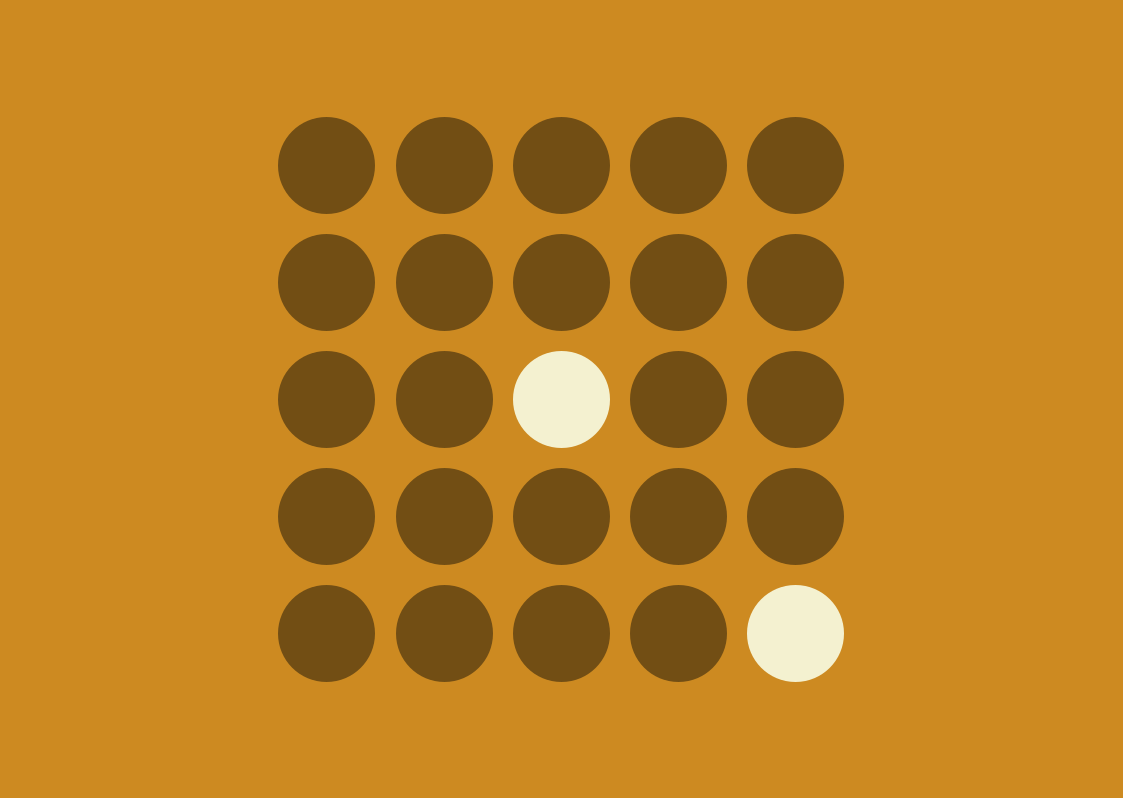
Peak-End Rule
People remember the peak and end of an experience most.
I design emotional moments—whether it’s a smooth onboarding, a rewarding confirmation, or a tiny interaction detail that makes people smile.
Systems, Tokens & Feedback Loops
Design systems are more than shared components—they’re shared understanding. I use design tokens to build systems that are portable, scalable, and easy to maintain across platforms and teams. They bring structure to color, spacing, and typography decisions, and they keep design aligned with code.
But systems are only as good as the feedback they’re built on. I regularly use Hotjar and other analytics tools to observe real user behavior—where they hesitate, where they click, where they give up. These insights ground the work in reality and help shape better decisions. I treat feedback not as validation, but as direction.
Beyond Office Work:
WordPress and Community
Outside my day job, I’m active in the WordPress community — building tools, leading teams, and sharing practical solutions.
Building alongside design </>
Maintaining personal projects helps me grow in different directions—whether it’s exploring new tools, building better workflows, or sharing knowledge in more creative ways.

Books I Come Back To
Interested to know more?
The above is just a glimpse of what I’ve accomplished over the past 25 years.