Built for WordPress designers, developers and agencies who are tired of the localhost→staging→live dance. Scripts Organizer lets teams write and preview code directly in WordPress — same collaboration model as editing posts, but for custom code.
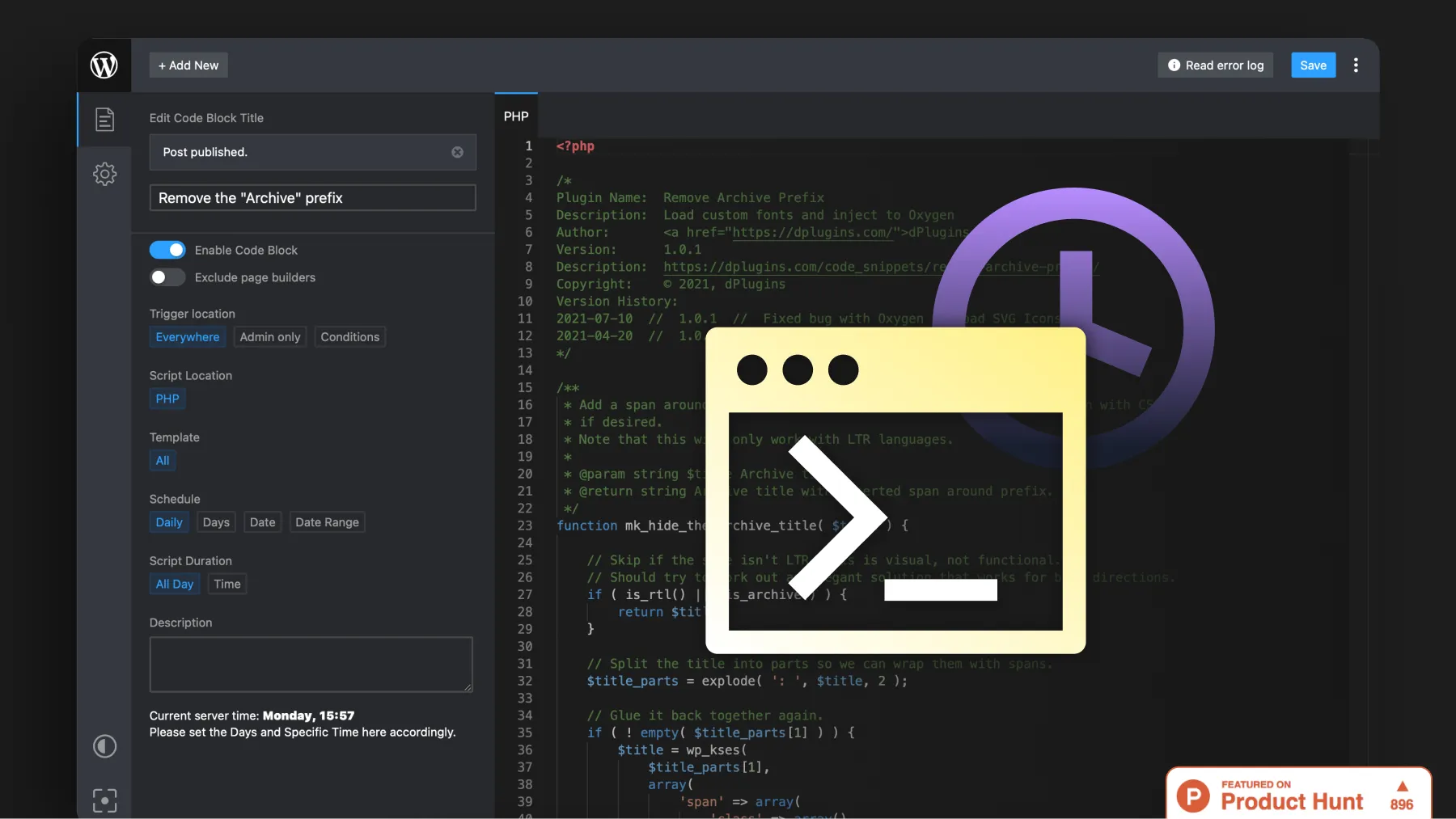
The Impact
- 10+ hours saved per project — no localhost→staging→live workflow.
- 100% workflow consistency across all team members.
- 2–4 hours → 10 minutes developer onboarding time.
- Days → instant for editors to preview developer changes.
A WordPress plugin I designed, built, and evolved through continuous user research. What started as an MVP testing code injection became a tool that lets designers bypass developers for common customization tasks.
The Problem
WordPress development workflow is painful: localhost, staging, syncing, merging. Every step adds friction. Adding a second developer multiplies the chaos.
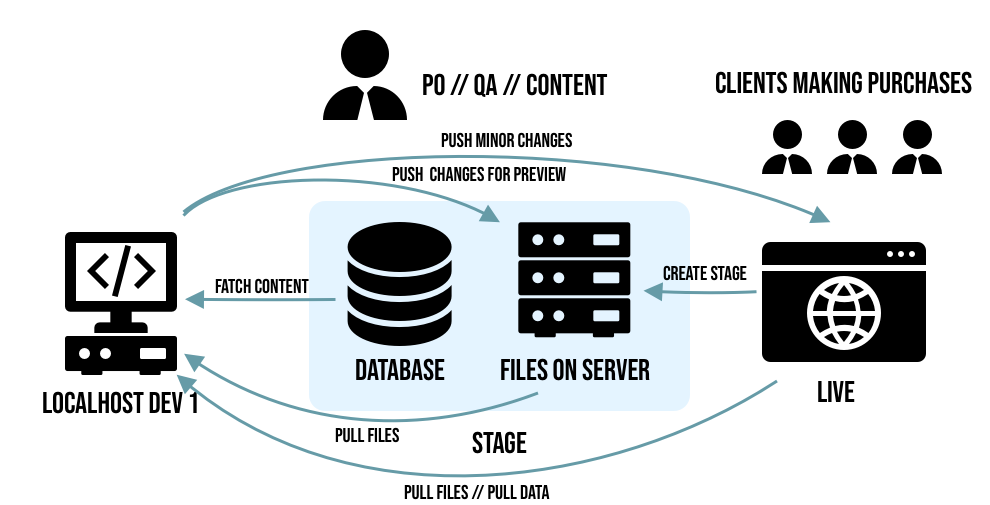
I wanted to solve this — but instead of building a full product upfront, I started with a question: will people actually use this?
MVP: Testing the Core Idea
The first version was minimal. No custom UI, no advanced editor — just code injection using existing WordPress meta fields.
The goal wasn’t polish. It was validation. Could users inject code snippets directly in WordPress? Would they find it useful? What would they try to do with it?
We shipped it and watched.
Building a Research Pipeline
After the MVP launched, I created a Facebook group to gather users in one place. This became the research engine:
Screen-sharing sessions — watched users work in real-time, saw where they got stuck.
Follow-up interviews — after observing tasks, asked deeper questions about their goals and pain points.
Persona research — surveyed the community to understand who they were and what they were trying to achieve.

The Discovery: Designers, Not Developers
The research revealed something unexpected. The primary users weren’t developers — they were designers who wanted to bypass developers.
They weren’t building complex systems. They were finding code snippets online for common tasks, injecting them into specific pages, and testing with the toggle on/off feature to see what worked. The toggle became critical — designers could safely experiment without breaking their site.
The Solution
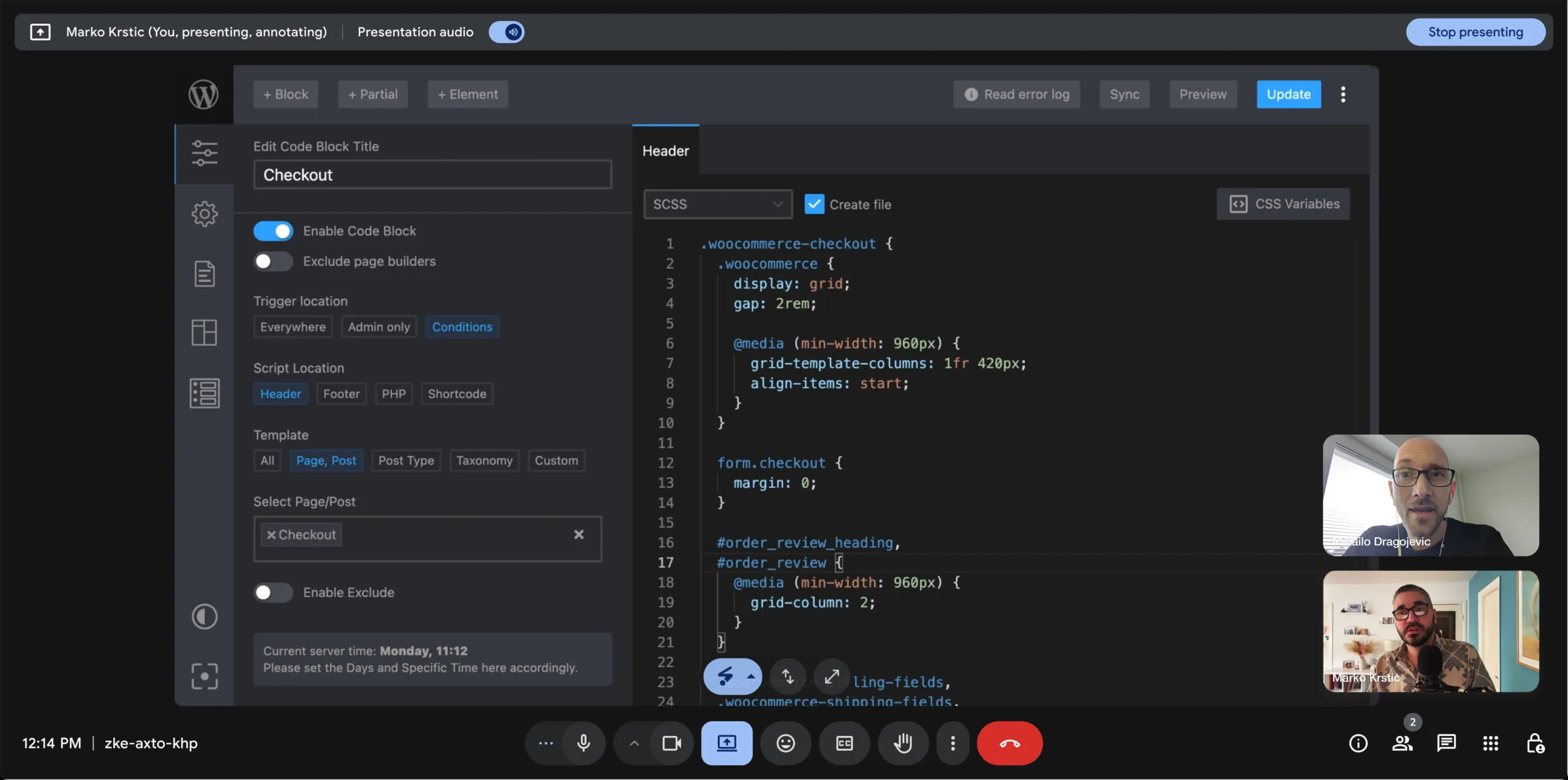
Scripts Organizer is a WordPress-native code editor. Write PHP, JS, SCSS, or HTML directly in the WordPress admin — same interface as editing posts.
Core concept: Code as content. No localhost. No staging sync. No git conflicts. Log in, write code, see changes immediately.
Key capabilities shaped by research: live preview with hot reload, Monaco editor (same as VS Code), conditional targeting for specific pages or post types, toggle on/off for safe testing, and collision detection to prevent duplicated work.
Research-Driven Iterations
User research didn’t just validate the product — it reshaped it. After analyzing how people actually used the MVP, we made significant changes:
Removed what nobody used. Script scheduling seemed useful in theory, but research showed almost no one needed it. We deprioritized it — still available if needed, but hidden to reduce UI clutter.
Added what people struggled without. SCSS compilation so users could write maintainable styles instead of raw CSS. External library loading for JavaScript animations and sliders (GSAP, etc.). Script descriptions so team members could understand what code does without reading it — especially helpful for less technical users deciding whether to keep a script.
Clarified what confused people. Made script placement (header, footer, custom hook) more prominent since that’s what users actually cared about. Simplified targeting for pages, post types, and taxonomies.
Improved the editing experience. Hot reload inside the editor — no need for multiple browser tabs. Full-screen mode to focus on code without WordPress admin distractions. Better Monaco editor integration for a professional coding environment.
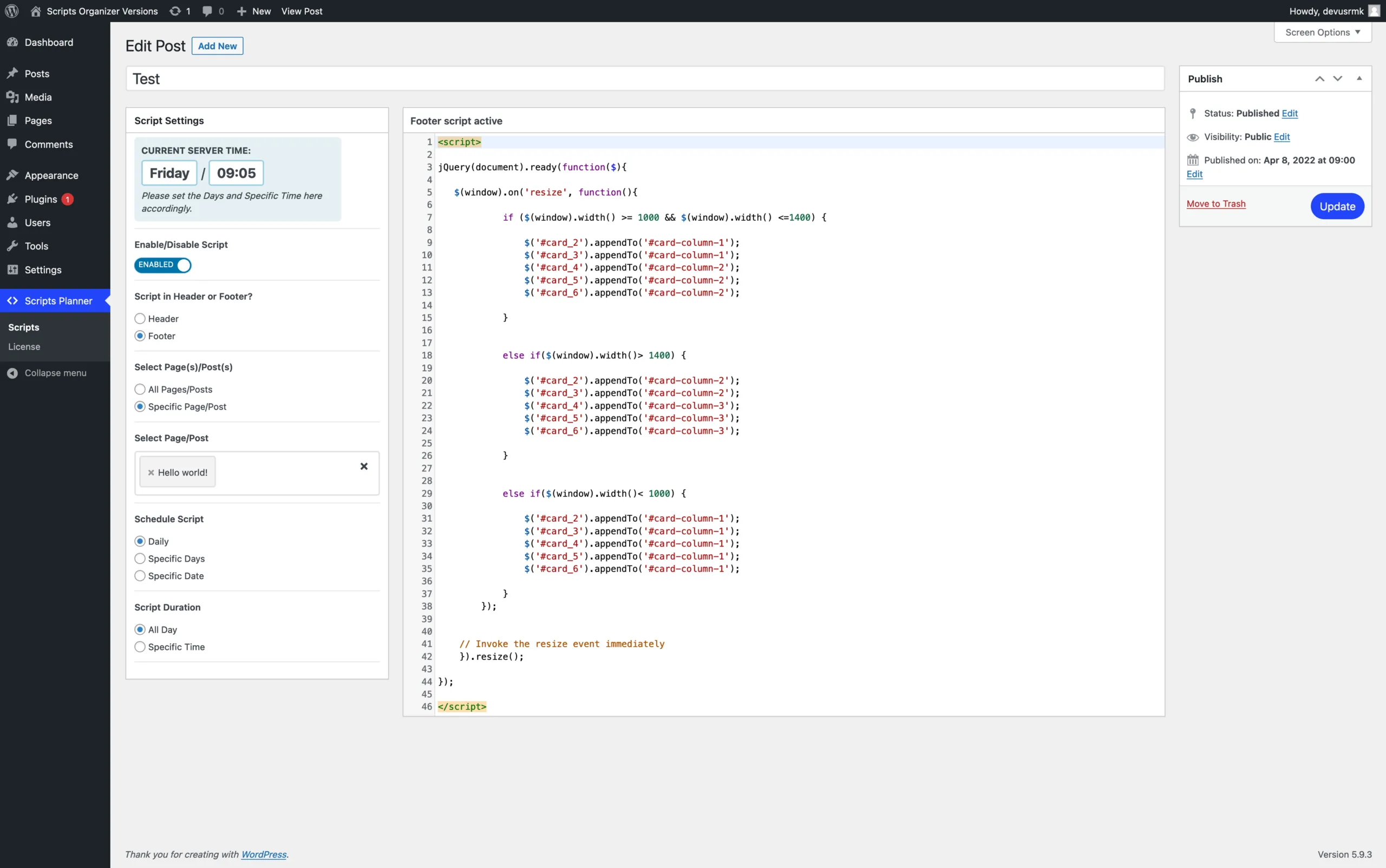
MVP
Minimal and unpolished — just enough to test if the core idea worked.
Current status
Shaped by research — every feature earned its place through real user feedback.
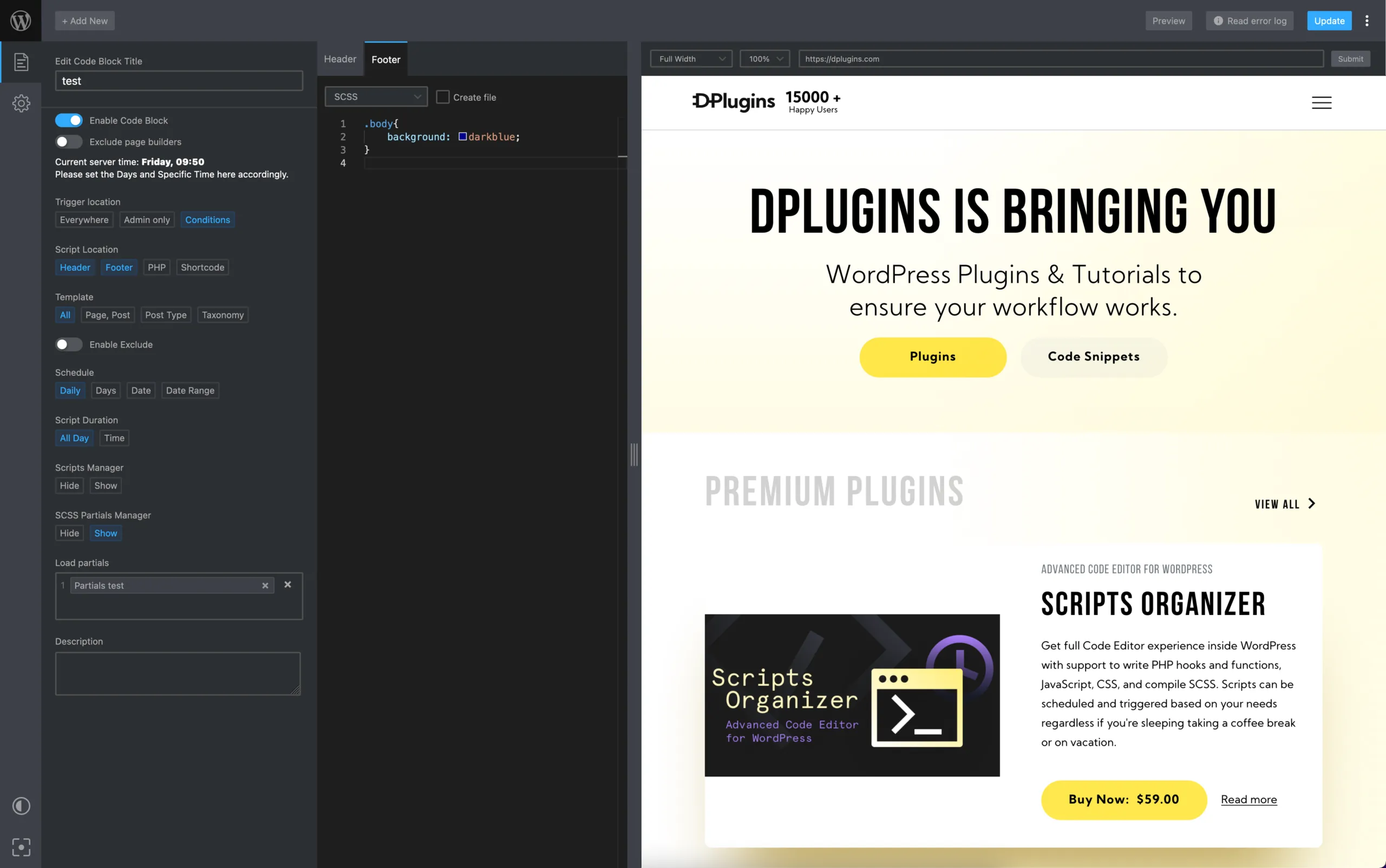
Product Evolution
We added more features in version 3.1 and 3.2 that is currently in alpha
Latest version promo video
Continued Evolution
The Facebook community remains a continuous research loop. Every release is informed by real user behavior, not assumptions. Version 3.1 and 3.2 added features driven directly by community feedback — the product keeps evolving with its users.